
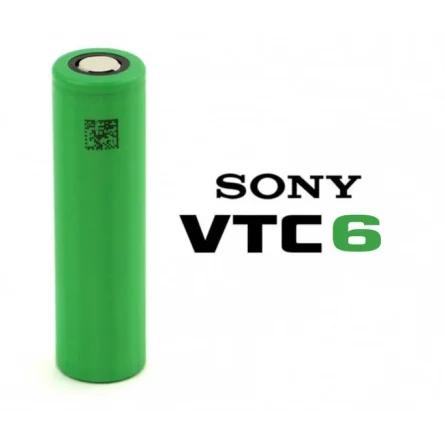

Sony Murata VTC6 INR18650 lithium cell with 3000mAh capacity and up to 30A high discharge. Ideal for electric mobility, power tools, vaping, power banks and high-performance battery packs.
Sony Murata VTC6 INR18650 3000mAh lithium cell designed for high-demand applications where an excellent balance between capacity, stability and high discharge current is required. The VTC6 is one of the most recognized 18650 cells in the high-performance lithium battery sector.
Thanks to its discharge capability and stable behavior, this cell is widely used in battery packs for electric mobility, power tools, advanced vaping devices, portable electronics, power banks and custom battery projects.
Within the 18650 cell market, the VTC6 stands out for offering a highly competitive balance between:
This makes it a very popular option both in professional applications and high-performance battery pack projects.
Its 3000mAh capacity provides good runtime in portable applications and lithium battery systems.
Designed for applications requiring high energy demand and intensive power consumption.
One of the most valued features of the VTC6 is its balance between runtime and discharge capability.
Widely used in battery packs for electric mobility, tools and advanced electronics.
Allows the cell to maintain charge for long periods when not in use.
Before purchasing an 18650 cell it is important to verify:
If these parameters match the original cell, compatibility will be correct in most applications.
18650 lithium cells should always be used with proper protection and management systems (BMS), especially in series or parallel configurations.
In addition:
| Model | Sony Murata VTC6 |
| Format | 18650 |
| Technology | INR Li-Ion |
| Nominal capacity | 3000mAh |
| Nominal voltage | 3.6V / 3.7V |
| Maximum charge voltage | 4.2V |
| Continuous discharge current | Up to 30A |
| Diameter | 18 mm |
| Length | 65 mm |
| Rechargeable | Yes |
Yes, this is the original VTC6 model manufactured by Murata.
Yes, it is one of the most commonly used cells in electric mobility battery packs and high-drain applications.
Yes, provided it is used correctly and within the recommended safety limits.
Yes, especially in series or parallel battery configurations.

<br /> <br /> <br />
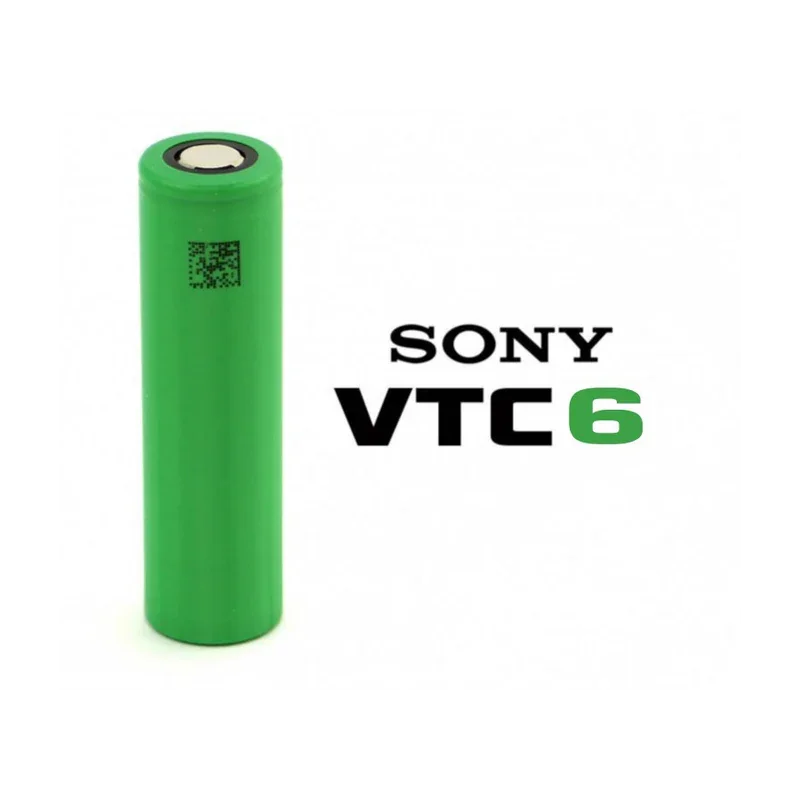
Sony Murata VTC6 INR18650 lithium cell with 3000mAh capacity and up to 30A high discharge. Ideal for electric mobility, power tools, vaping, power banks and high-performance battery packs.